
How to Create a Content Marketing Strategy

On this page
Step 1: Define the Strategic ‘Why’ Behind Your Content
Step 2: Develop and Validate Audience Personas
Step 3: Establish Clear Content Pillars
Step 4: Focus on Quality to Maximise Impact
Step 5: Select Channels Strategically
Step 6: Plan with a Content Calendar
Marketing leaders are navigating a period defined by constraint and heightened accountability. According to Gartner’s 2025 CMO Spend Survey, marketing budgets have flattened at an average of 7.7% of total company revenue, even as expectations for growth, efficiency, and measurable impact continue to rise. Nearly 60% CMOs report that their budgets are insufficient to fully execute their strategies, leaving little margin for inefficiency or misalignment.
In this environment, success is no longer driven by producing more content or expanding channel presence. It depends on making disciplined, defensible strategic choices about where to focus, what to prioritise, and how to measure impact. Content marketing, when treated as a strategic system rather than a production engine, remains one of the most effective ways to build trust, reinforce brand authority, and support revenue outcomes over time.
The differentiator is not whether organisations invest in content, but how intentionally that investment is planned, executed, and evaluated.
Step 1: Define the Strategic ‘Why’ Behind Your Content
Effective content marketing begins with clarity. Before ideas, formats, or channels enter the conversation, content must be anchored to business priorities. Without this foundation, even well-produced content risks becoming disconnected from the outcomes leadership expects marketing to influence.
This step requires aligning content efforts directly to business objectives, whether that means increasing pipeline contribution, strengthening brand authority in a competitive market, supporting product launches, or improving customer retention. When content is tied to clearly articulated goals, it becomes a strategic asset rather than a creative output.
Defining the ‘why’ also enforces prioritisation. In a constrained budget environment, content should address the most material business challenges first, ensuring resources are directed where they can deliver measurable impact.
Step 2: Develop and Validate Audience Personas
Once goals are established, focus shifts to understanding the audience. Content cannot be effective if it is created for everyone or based on assumptions. Buyer personas provide the structure needed to focus efforts on the people who matter most.
Strong personas move beyond surface-level demographics. They capture professional realities, challenges, motivations, and decision-making contexts. They also reveal how different segments consume information, what questions they are trying to answer, and what signals trust and credibility to them.
Persona development should draw on existing data, analytics, customer interactions, and market research. Validation is equally important. Personas should be revisited and refined as markets evolve, ensuring content remains aligned with real audience behaviour rather than outdated assumptions.
Step 3: Establish Clear Content Pillars
With a clear understanding of business goals and audience needs, the next step is defining content pillars. These pillars act as strategic themes that guide all content creation, bringing focus, consistency, and coherence across channels and campaigns.
Content pillars should sit at the intersection of organisational expertise and audience interest. They help prevent fragmented or reactive production by providing a framework that supports long-term storytelling and thought leadership. Over time, content built around these pillars reinforces brand positioning and deepens credibility in priority areas.
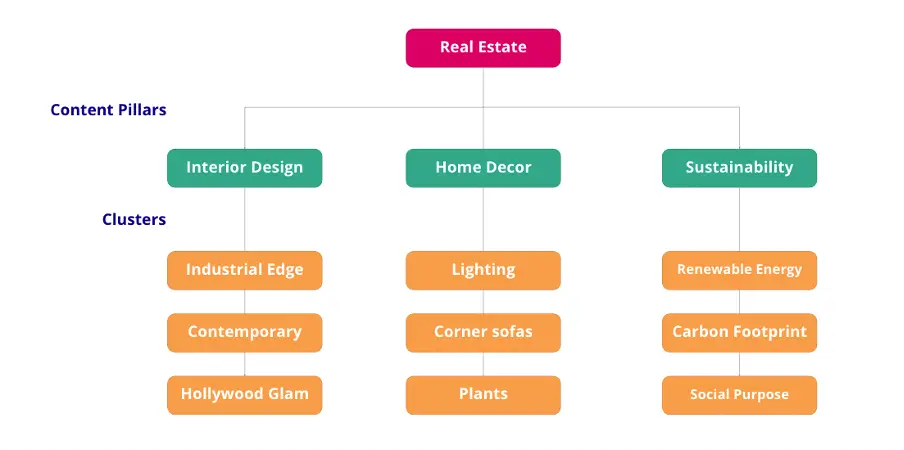
This approach also improves efficiency. Rather than starting from scratch with each new asset, teams can develop clusters of related content that build on shared research, insight, and messaging.
Step 4: Focus on Quality to Maximise Impact
In an environment where attention is scarce, quality matters more than volume. High-quality content that is genuinely useful, insightful, or educational performs better across channels and continues delivering value long after publication.
Quality content strengthens search visibility, increases engagement, and builds trust with increasingly selective audiences. While it may require greater upfront investment, it reduces waste by delivering sustained performance rather than short-lived results.
For CMOs tasked with maximising limited budgets, shifting from output-driven to impact-driven content is essential.
Step 5: Select Channels Strategically
Not every channel deserves equal attention. Each platform demands different formats, cadences, and levels of creative investment. Spreading resources too thin often results in inconsistent execution and diminished returns.
Channel selection should be guided by audience behaviour and performance data. Analytics can reveal where engagement is strongest, which channels drive meaningful traffic, and where conversion opportunities exist. Concentrating effort on channels aligned with audience preferences enables stronger results without increased spend.
Strategic focus, rather than omnipresence, is what drives efficiency.
Step 6: Plan with a Content Calendar
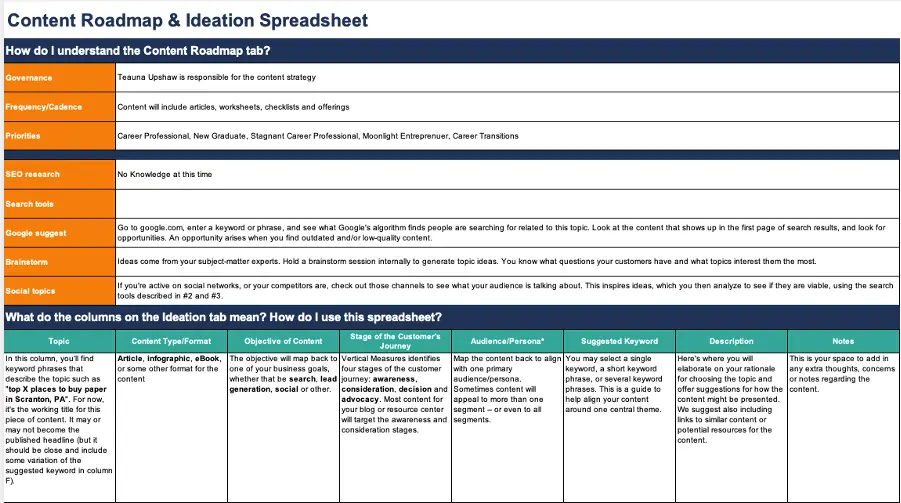
A content calendar translates strategy into execution. It brings structure to content efforts, aligns publishing with business timelines, and supports consistency across channels. Planning reduces reactive work, which often consumes disproportionate time and resources.
While flexibility remains important, particularly in fast-moving markets, a calendar provides a strategic backbone that keeps content aligned with priorities and limits last-minute decisions that dilute impact.
Consistency, supported by planning, is a key driver of long-term content performance. At IDX, we have created a content calendar template to help you get started.
Step 7: Measure Performance and Refine the Strategy
Measurement is the final step, and it is ongoing. Tracking performance allows marketers to understand what resonates, what drives engagement, and where content supports business outcomes. Tools such as web analytics, social insights, and marketing automation platforms provide visibility across the funnel.
Regular analysis enables refinement. Content marketing is inherently iterative, and performance insights should inform future decisions, from topic selection to format and distribution. Clear reporting also helps demonstrate ROI to stakeholders, reinforcing content’s role as a strategic business driver.
IDX Helps Turn Constraint into Advantage
Turning constraint into advantage requires strategic discipline. When content is grounded in business objectives, shaped by real audience insight, organised around clear priorities, and measured against meaningful outcomes, it becomes a lever for sustainable growth rather than a cost centre to be defended.
At IDX, we help organisations operationalise this approach through our ConnectedContent™ methodology. By aligning strategy, audience intelligence, execution, and measurement into a single, integrated system, we help marketing leaders reduce waste, improve focus, and demonstrate impact with greater confidence. In an environment where every investment is scrutinised, clarity and connection are what allow content to perform at its highest level.
Connect with IDX. Build a content strategy that performs.
- Introduction
- Step 1: Define the Strategic ‘Why’ Behind Your Content
- Step 2: Develop and Validate Audience Personas
- Step 3: Establish Clear Content Pillars
- Step 4: Focus on Quality to Maximise Impact
- Step 5: Select Channels Strategically
- Step 6: Plan with a Content Calendar
- Step 7: Measure Performance and Refine the Strategy
- IDX Helps Turn Constraint into Advantage
Let's chat
Whether you're looking for service, support or a future strategic partner - we're here to help.
LDN