
ChatGPT Launches Business Hub: What It Means for Brands
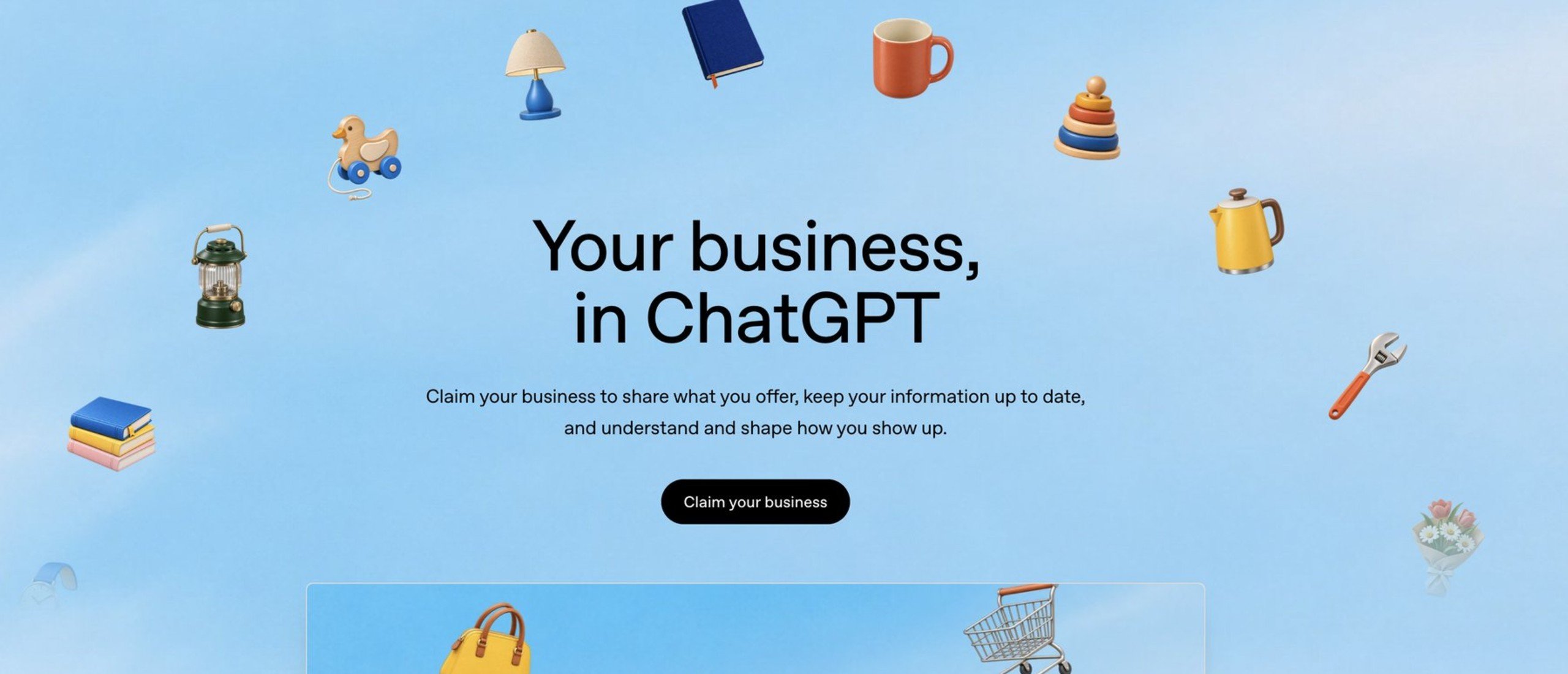
On 10 November 2026, OpenAI debuted Businesses in ChatGPT. Its Business Hub gives eligible brands access to first-party insights into how often ChatGPT mentions their business, how many people view their profile and click through to their website, and the conversation themes in which they appear (PPC Land). For a platform serving 1.2 billion weekly users, this is the first time brands have been able to see their footprint through platform-sourced data.
The last major development of this kind in search reshaped the industry. Google Search Console turned SEO from an act of faith into a measurable, board-reportable discipline. Business Hub could mark a similar shift for Answer Engine Optimisation: from estimated visibility to observed performance.
For brands, the implications are significant. AI visibility can now be measured using platform-level data, giving businesses new ways to assess their commercial, reputational and talent-related presence in ChatGPT.
What now: A verified brand presence with performance data attached
Business Hub lets businesses claim and verify their ChatGPT profile, keep business details and product feeds current, and access insights into how they appear across ChatGPT's answers. Eligible US ecommerce and online service businesses can also launch Business Agents, branded assistants that users can chat with directly from the profile.
|
Capability |
What brands can now see or do |
Why it matters |
|
Mentions |
Counts and trends showing when ChatGPT references the business |
A platform-sourced visibility measure |
|
Profile views |
How often users open the brand's ChatGPT profile, where available |
A signal of active consideration beyond a passive mention |
|
Website clicks |
Recorded clicks to the brand's website |
Connects AI visibility to traffic and, through analytics, potential pipeline |
|
Discovery topics |
Common conversation themes in which the brand appears |
Offers insight into the questions and subjects associated with the brand |
|
Verified profile and feeds |
Maintain business details, product information, prices and availability |
Gives brands a way to keep important information current |
|
Business Agents |
A branded assistant users can chat with from the profile |
Creates another opportunity to engage with potential customers |
Verification involves confirming business identity through available methods, which may include a business phone number, email or DNS, followed by an identity review (Search Engine Roundtable). OpenAI describes Business Hub as an early step and plans to expand its markets, categories and tools for organisations with more complex needs. This points towards richer data and functionality over time.
The rollout has some limitations. Eligible businesses in countries where ChatGPT is available can claim profiles, although access to insights and other features depends on eligibility and verification. Business Agents are initially available to eligible US ecommerce and online service businesses. Insights are also subject to volume thresholds, so smaller sub-brands and markets may not see reporting data immediately. Global brands should start with eligible entities and establish which markets can access the available features.
Why now: ChatGPT needs to show platform performance
ChatGPT has grown into a 1.2 billion weekly user channel without giving brands first-party data about their presence on the platform. That is changing as OpenAI develops its advertising business.
ChatGPT ads launched in February 2026 and, by 21 October, were live in 89 countries, with more than 100,000 advertisers since launch (PPC Land). Marketers need reliable performance data to justify investment in a channel, and one of the first questions brands will ask is how they already appear there. Platform reporting can help answer that question and support decisions about future media investment.
As advertiser spending grows, so does the demand for more detailed data, including prompt insights, competitor visibility and clearer metric definitions.
The GSC precedent: First-party data turned SEO into a key discipline
Google Search Console (known as Webmaster Tools until 2015) was a critical step forward for the search industry because it created a shared, platform-sourced view of search performance that brands, agencies and finance teams could use. Its value grew in four stages.
- Diagnostics (mid-2000s). Crawl errors, indexing status and sitemaps gave brands their first view of how Google saw their websites. Technical SEO became something teams could diagnose and improve.
- The query layer (from 2011). When Google encrypted searches and keyword referrals became "(not provided)", analytics lost much of its query-level data. Search Console's Performance report, with impressions, clicks, CTR and position by query and page, became an important first-party link between search demand and website performance.
- Prioritisation at scale. Query-by-page data helped teams identify pages ranking in positions 5 to 15 with high impressions but weak CTR, then improve titles, search intent and internal links. This created a repeatable process for identifying and addressing SEO opportunities.
- Governance and executive reporting. The API, longer data retention and experience reports, including Core Web Vitals, brought Search Console into BI systems, board reporting and engineering backlogs. SEO became easier to measure and communicate to senior decision-makers.
Three lessons from that history now apply to ChatGPT:
- Platform data creates a shared language. Once impressions and clicks came directly from Google, SEO could be discussed in the same terms by marketing, finance and the board. Mentions and clicks from OpenAI offer a similar starting point for AEO.
- The data gets richer as adoption grows. Search Console launched with basic diagnostics and added query analytics, an API and longer data retention over the following decade. OpenAI has signalled that Business Hub will develop over time.
- Early adopters can shape the industry playbook. The brands and agencies that built workflows around Search Console helped establish how SEO was managed and reported. A similar opportunity now exists for businesses developing their AEO strategies.
What this means for brands: Better data, better decisions
With platform data becoming available, brands can approach AEO with more structured measurement, prioritisation and reporting. There are four important changes this creates:
- From estimated data to platform-sourced data. Brands can now see specific ChatGPT visibility and engagement signals, then use prompt-based tracking and other monitoring tools to investigate changes over time.
- From downstream traffic to upstream influence. Mentions and profile views offer insight into brand presence before a user visits a website. Combined with website traffic and conversion data, these signals can help brands better understand the role AI platforms play in the customer journey.
- From guessing the questions to understanding the themes. Discovery topics show the subjects associated with brand mentions, from product comparisons to employer reputation. Content, PR, communications and talent marketing teams can use these insights to identify areas for further investigation and prioritisation.
- From passive to managed presence. Verified profiles, product feeds and Business Agents give brands more ways to maintain business information and engage with users at the point of consideration. They also create opportunities to improve the accuracy and usefulness of information associated with the brand.
ChatGPT also joins a wider move towards AI platform transparency. Google's Search Console now includes AI performance reporting, Bing Webmaster Tools provides insights into topics where websites receive AI citations, and Merchant Center reports share of voice across Google's AI surfaces. Brands that bring these signals together will be better positioned to manage AI visibility across major answer engines.
Business Hub implications for teams
ChatGPT doesn't only answer questions such as "Which product should I buy?" It also answers "Is this company a good employer?", "What is its record on sustainability?" and "Should I invest?". The insights available through Business Hub could have applications across the teams responsible for how an organisation is understood.
|
Team |
Audiences in the answer |
What Business Hub adds |
Example use |
|
Corporate comms and reputation |
Journalists, policymakers, regulators and the public |
Mention trends and the themes associated with them |
A spike in mentions associated with a theme such as “data breach” or “product recall” could flag an issue gaining attention in AI answers, prompting a response alongside media monitoring. |
|
Investor relations |
Analysts, shareholders, private equity and M&A teams |
Visibility into corporate narrative themes over available reporting periods |
Checking whether results-day and strategy messages appear among the themes associated with the company. |
|
Employer brand and talent |
Candidates, graduates and current staff |
Insights into whether careers, culture and pay themes appear |
If topics such as “working at” or “graduate scheme” are absent, careers content may have an opportunity to gain greater visibility. |
|
B2C marketing |
Shoppers and comparison seekers |
Mentions, clicks, product feeds and, in the US, Business Agents |
Identifying themes around gifts, pricing or local stores and keeping product information and availability current. |
|
B2B marketing and sales |
Buying committees, including users, finance, IT and procurement |
Insights into decision-stage themes and website clicks |
Understanding whether security, integration or pricing questions are associated with the brand and using those insights to equip sales teams. |
|
ESG and sustainability |
NGOs, ratings agencies and conscious consumers |
Insights into themes associated with sustainability and corporate responsibility |
Assessing whether verified sustainability reports and other authoritative information are reflected in the themes associated with the brand. |
What brands and agencies should do over the next quarter
There are three important steps for brands and agencies:
- Claim and verify every eligible entity. Cover the parent brand, sub-brands and priority markets. An authorised executive at the brand should own the identity verification process so that control remains with the business. Keep in mind that access to some features may depend on market eligibility and reporting thresholds.
- Capture baselines now. Start tracking available mentions, profile views, website clicks and discovery topics. Establishing an initial benchmark will make it easier to assess changes as reporting develops.
- Integrate with existing reporting. Bring Business Hub data into existing AEO monitoring, from prompt identification to dashboard reporting. Combining platform-sourced insights with other visibility, traffic and conversion measures will give teams a broader view of performance.
If you want to discuss this or other AI optimisation issues, you can book a meeting with Stefan Bardega, Global Head of Performance Marketing.
- Introduction
- What now: A verified brand presence with performance data attached
- Why now: ChatGPT needs to show platform performance
- The GSC precedent: First-party data turned SEO into a key discipline
- What this means for brands: Better data, better decisions
- Business Hub implications for teams
- What brands and agencies should do over the next quarter
Let's chat
Whether you're looking for service, support or a future strategic partner - we're here to help.
LDN